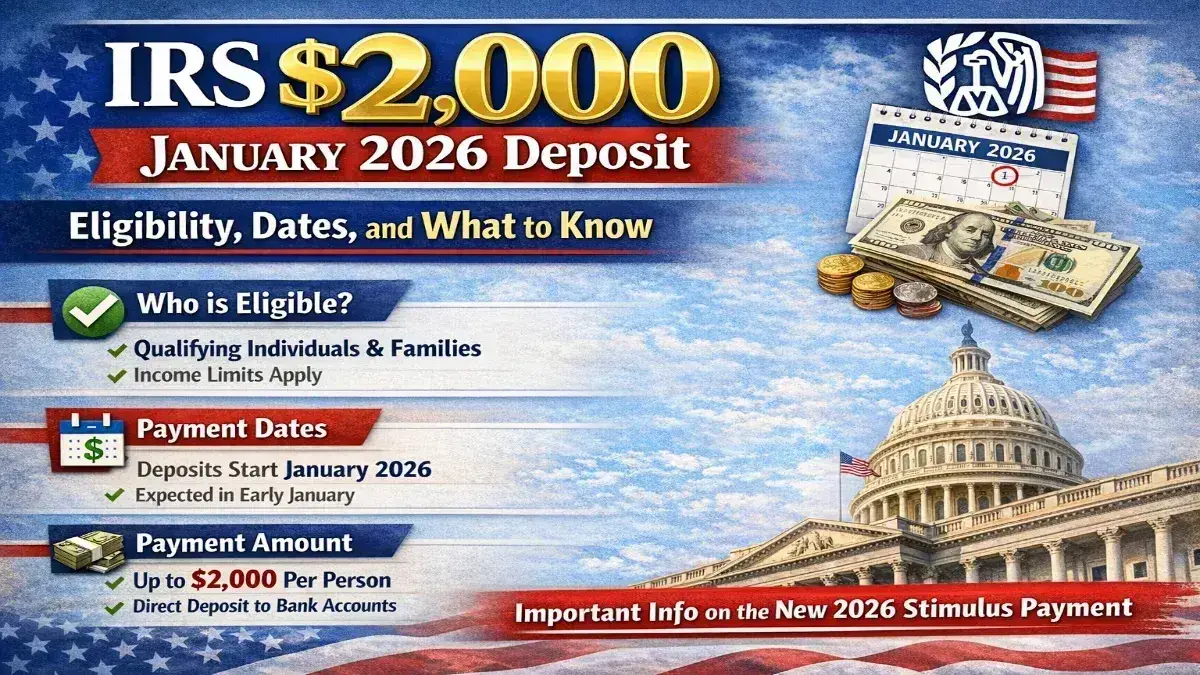
The IRS $2,000 January 2026 deposit has sparked widespread interest among U.S. taxpayers, with many people trying to understand who may qualify, when payments could arrive, and what this deposit actually represents. While headlines can be confusing, this guide breaks down the facts clearly so readers know what to expect and how to prepare.
What Is the IRS $2,000 January 2026 Deposit?
The reported $2,000 deposit is not a brand-new nationwide stimulus announced for everyone. Instead, it is linked to specific IRS-related payments that may include tax refunds, refundable tax credits, or adjusted payments based on individual tax situations. The exact amount varies by taxpayer, but some eligible individuals may see deposits close to $2,000 depending on their circumstances.
Who May Be Eligible?
Eligibility for a January 2026 IRS deposit depends on several factors tied to tax filings and income levels. Individuals who filed their federal tax returns accurately and on time are more likely to receive payments earlier. Taxpayers who qualify for refundable credits, such as credits related to income, dependents, or prior-year adjustments, may also see higher refund amounts. Eligibility is determined on a case-by-case basis, not automatically for all Americans.
Expected Payment Dates
IRS deposits typically follow a structured schedule. For January 2026, payments are expected to arrive throughout the month rather than on a single day. Direct deposit recipients usually receive funds faster than those who opted for paper checks. The exact date depends on when a return was processed and whether there were any verification delays.
How the Payment Is Sent
Most IRS payments are issued via direct deposit to the bank account listed on the most recent tax return. Taxpayers who did not choose direct deposit may receive their payment by mail. Ensuring that banking details and mailing addresses are up to date is critical to avoid delays.
Important Things to Know
Not everyone will receive exactly $2,000. The amount depends on individual tax calculations, credits, and adjustments. Taxpayers should be cautious of misinformation circulating online and rely on official IRS communications for confirmation. Checking refund status through official IRS tools is the safest way to track any expected deposit.
What You Should Do Now
To avoid delays, taxpayers should make sure their tax filings are complete and accurate. Keeping personal information updated and responding promptly to any IRS notices can help ensure payments are processed smoothly. Those unsure about eligibility may benefit from reviewing their tax return details or consulting a qualified tax professional.
Final Takeaway
The IRS $2,000 January 2026 deposit is best understood as a potential refund or credit-related payment rather than a universal stimulus. Eligibility, timing, and amounts vary by individual. Staying informed, filing taxes correctly, and monitoring official IRS updates are the best ways to understand whether a payment is coming and when it may arrive.