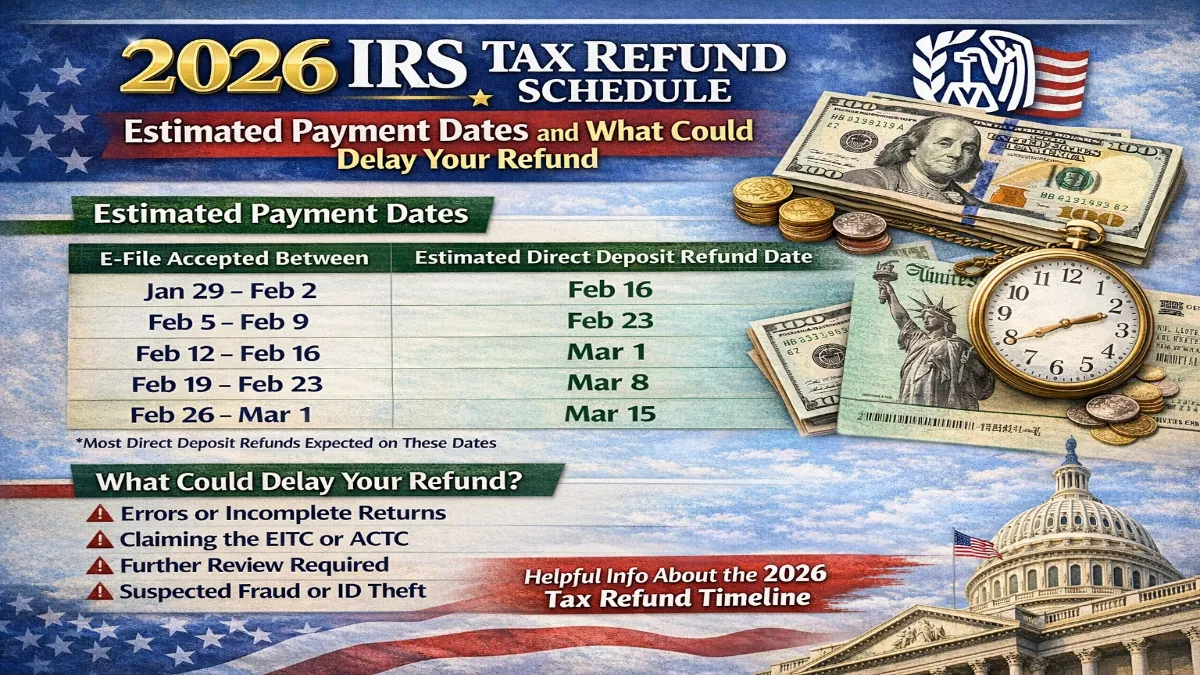
The 2026 IRS tax refund schedule is a top concern for millions of American taxpayers preparing to file their returns. Understanding when refunds are likely to be issued, how the process works, and what might cause delays can help taxpayers plan ahead and avoid unnecessary stress during tax season.
How the IRS Refund Schedule Works
When you file your federal tax return, the IRS begins processing once it receives your information. Refund timing depends on:
- How you file — e-file generally processes faster than paper filings.
- Refund method — direct deposit is quicker than mailed checks.
- Verification and errors — omissions or mismatches can slow processing.
The IRS typically updates its refund schedule early each tax season, offering estimated timelines when most refunds are sent.
Estimated 2026 IRS Refund Dates
While the IRS doesn’t guarantee exact dates, historical patterns suggest the following general timeline for 2026 tax refunds:
- Late January–Early February: First wave of refunds for returns filed early and without issues.
- Mid to Late February: Majority of e-filed refunds via direct deposit.
- March–April: Refunds for later filers or more complex returns.
- April 15 Deadline: Last batch as filing season closes.
Taxpayers who file early and choose direct deposit usually receive refunds sooner in the cycle.
Direct Deposit vs. Mailed Checks
Refunds sent by direct deposit typically arrive fastest—often within 2–3 weeks after the IRS accepts a return.
Refunds by paper check in the mail can take significantly longer—sometimes 4–6 weeks or more depending on postal delays.
Common Reasons Refunds Are Delayed
Several issues can slow down refund processing, including:
- Errors on the tax return — incorrect Social Security numbers, math mistakes, or missing signatures.
- Identity verification — the IRS may flag returns that trigger review to prevent fraud.
- Late or inaccurate information — mismatches with IRS records (e.g., W-2 or 1099 forms).
- Backlogged filings — peak filing periods can stretch processing times.
If your refund is delayed, avoid re-filing unless you’re sure there’s an error—you could create further processing issues.
How to Track Your Refund
The IRS provides tools to check refund status:
- Use “Where’s My Refund?” on the IRS website.
- Check through the IRS2Go mobile app.
Both tools update daily once your return is accepted and provide the most accurate insight into timing.
Tips to Avoid Delays
To help ensure a smooth refund process:
- File early and use e-file with direct deposit.
- Double-check identification numbers and income figures.
- Respond promptly to any IRS notices.
- Avoid submitting duplicate returns.
Final Takeaway
While exact refund dates vary for each taxpayer, most Americans can expect their 2026 tax refunds between late January and April. Filing early, choosing direct deposit, and avoiding common errors are the best ways to speed up the process. If delays occur, tracking tools and careful review of your return can help clarify next steps.
Cha