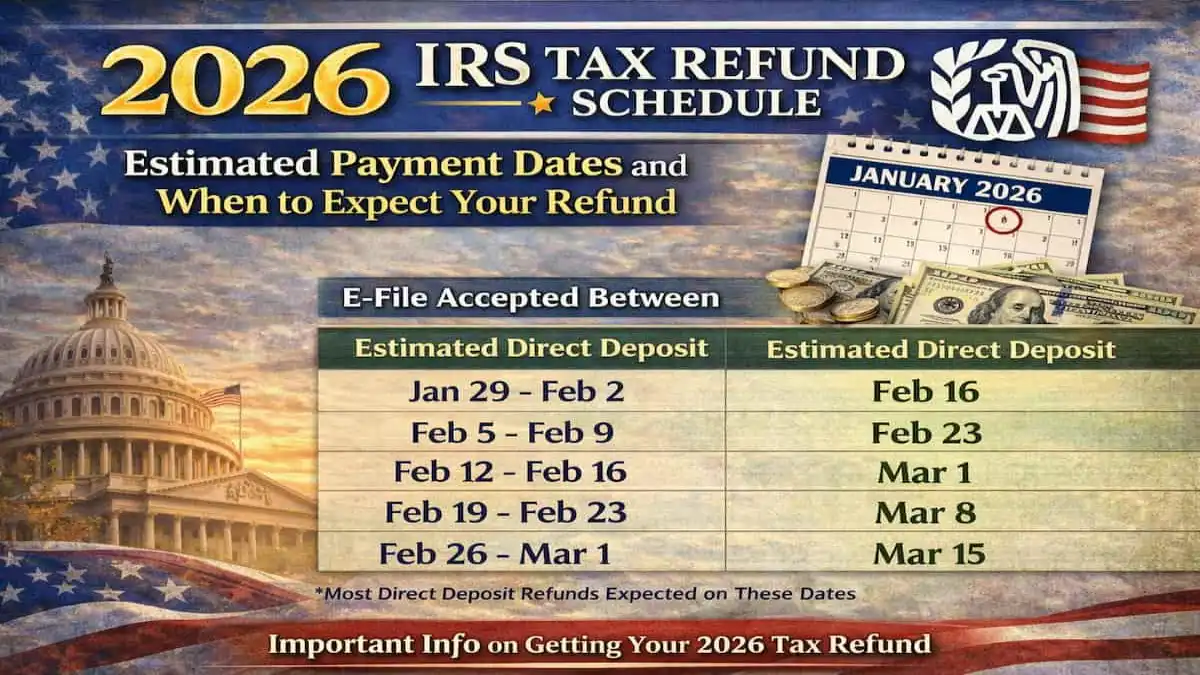
As the 2026 tax season approaches, millions of Americans are preparing to file their federal income tax returns and are eager to know when their IRS refunds may arrive. While the IRS does not provide exact refund dates for every taxpayer, past trends offer a reliable estimate of when most payments are typically issued. Understanding the refund timeline and what can affect processing speed can help you plan your finances more confidently.
How the IRS Refund Process Works
Once you submit your federal tax return, the IRS begins reviewing and processing it. Refund timing depends on several key factors, including how you file, the accuracy of your return, and how you choose to receive your refund.
Electronic filing usually speeds up processing, while paper returns take longer to review. Direct deposit is the fastest way to receive a refund, while mailed checks can take additional weeks.
Estimated IRS Refund Payment Timeline for 2026
Based on historical IRS processing patterns, most refunds in 2026 are expected to follow this general schedule:
Late January to early February
Early filers who submit returns as soon as the IRS opens filing season and choose direct deposit may start seeing refunds arrive.
Mid-February
This is when a large portion of refunds are typically issued, especially for electronically filed returns without errors.
March through early April
Refunds continue for later filers, those with more complex returns, or returns requiring additional review.
After the April tax deadline
Final refunds are processed for those who filed closer to the deadline or submitted corrected returns.
These timeframes are estimates and can vary based on individual circumstances.
Direct Deposit vs. Paper Check Timing
Taxpayers who choose direct deposit usually receive refunds within two to three weeks after the IRS accepts their return. This method is faster and more secure.
Those who opt for a paper check can expect a longer wait, often four to six weeks or more, depending on processing and mail delivery times.
Common Reasons Refunds May Be Delayed
Several issues can slow down IRS refund processing, including:
Errors in personal information or income reporting
Math mistakes on the return
Identity verification or fraud prevention checks
Incomplete documentation
High filing volume during peak season
If the IRS needs more information, it may contact you, which can further delay your refund.
How to Track Your 2026 IRS Refund
The IRS provides official tools that allow taxpayers to check their refund status once a return has been processed. These tools typically show when the return is received, approved, and when the refund is sent.
Refund status updates usually appear within a few days after e-filing or a few weeks after mailing a paper return.
Tips to Receive Your Refund Faster
To help ensure quicker processing in 2026:
File electronically instead of by mail
Choose direct deposit for refund payments
Double-check all personal and income details
Submit returns early in the tax season
Respond quickly to any IRS notices
These steps significantly reduce the risk of delays.
Final Takeaway
While exact IRS refund dates for 2026 will vary by individual, most taxpayers can expect their refunds to arrive between late January and April. Filing early, using direct deposit, and ensuring accurate information are the best ways to receive your refund as quickly as possible.